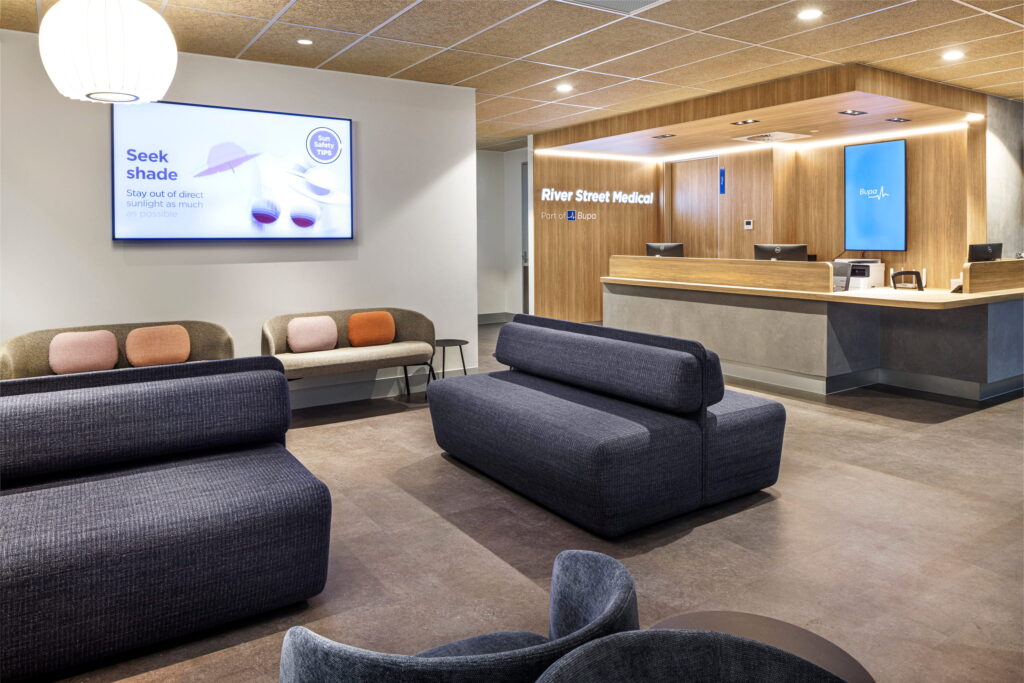
Setting up a medical practice is one of the most significant steps a healthcare professional can take. It reflects real ambition: to build something of your own, to deliver care on your own terms, and to create a space that supports both your patients and your team.
Alongside that opportunity comes a level of complexity that many practice owners don’t anticipate. The location you choose shapes your fit-out cost. The tenancy type you sign affects your approval timeline. The builder you engage determines whether compliance is resolved during design or discovered mid-construction, when fixing it costs far more.
These decisions connect in ways that aren’t always obvious upfront. Understanding the sequence helps.
Key takeaways
- Sequencing matters. Decisions made in earlier stages directly affect options, costs, and timelines later on.
- The fit-out stage carries the most risk. Most first-time practice owners underestimate both the complexity and the consequences of engaging the wrong builder.
- Tenancy type shapes your budget before construction begins. The difference between a warm shell and a cold shell can shift costs significantly.
- Compliance requires specialist knowledge. NCC Class 9a classification, RACGP 5th Edition Standards, and DA approvals all need to be resolved by a team with healthcare construction experience.
- Design decisions are harder to undo than most people expect. Telehealth infrastructure, patient flow, and accreditation readiness are all easier to incorporate at the design stage than to retrofit later.
- Early engagement reduces cost and risk. Working with a healthcare specialist from the outset supports more informed planning and a smoother path to accreditation.
The Six Stages of Setting Up a Medical Practice
Most practice owners find that setting up a medical practice involves six broad stages:
- Business planning and financial groundwork
- Location and tenancy
- Legal registration and compliance
- Fit-out and construction
- Technology and staffing
- Accreditation
The stages aren’t strictly sequential. Site selection and business planning often overlap, and fit-out design ideally begins before a lease is signed. The order does, however, reflect where the real dependencies sit for anyone working through what you need to open a medical clinic.
Stage 1: Business Planning and Financial Groundwork
The financial groundwork behind setting up a medical practice starts well before a builder is engaged. The decisions you make here (legal structure, billing model, growth projections) directly affect what you can spend on the physical space, what you can borrow, and how quickly you’ll reach profitability.
Business Structure and Financial Projections
Common structures for Australian medical practices include sole trader, partnership, company, and trust. Each carries distinct implications for tax, liability, and succession planning.
GP practices frequently operate through corporate trustee structures for asset protection reasons that don’t apply to general retail businesses. An accountant with medical sector experience is worth engaging before anything is registered.
Once the structure is settled, build your financial model before looking at properties. Revenue projections based on realistic consultation volumes, bulk billing ratios, and staffing costs determine how much fit-out budget is defensible.
A site that looks right on paper can stop making financial sense once the full fit-out cost is included.
Funding the Build
Fit-out costs vary considerably depending on tenancy type, room count, location, and specification level. Beyond the construction cost, your budget needs to account for:
- Council fees and DA costs: Approval requirements vary by state and site, and the associated fees need to be factored in from the outset.
- Medical equipment and furnishings: Often underestimated relative to construction cost, particularly for procedure-heavy specialties.
- IT systems and infrastructure: Data cabling, server access, and practice management software all have associated costs that flow into the fit-out scope.
- A contingency allowance of around 10 to 15%: Some level of cost movement is expected. Contingency supports stability without compromising quality or compliance.
First-time practice owners consistently underestimate these line items. Healthcare-specific lending works differently from standard commercial finance. Understanding your fit-out finance options early gives you a clearer picture of what’s available and what the numbers actually look like.
Stage 2: Choosing and Securing the Right Location
Your choice of location affects everything downstream. Patient catchment, fit-out cost, approval timelines, and how quickly your appointment books fill are all shaped by the site you choose.
There are more variables here than most first-timers anticipate.
Catchment and Demographics
Understanding the local patient demographic is a useful starting point. The Australian Bureau of Statistics publishes data by suburb and SA2 region, including age profiles, household income, and population growth projections.
For a GP clinic, areas with an ageing population, growing families, or limited existing GP supply typically offer the strongest opportunity. For specialist practices, proximity to referral networks matters more than raw population numbers.
Proximity to allied health, pathology, and pharmacy supports patient convenience. For practices reliant on referrals, being near a hospital or specialist network can be the difference between a slow start and a full appointment book.
Warm Shell vs Cold Shell
This distinction has a direct and significant impact on your fit-out cost, and it’s consistently underestimated.
A warm shell is a tenancy where base services, including power, plumbing, and air conditioning, have been brought to the space and are ready for an interior fit-out to begin. A cold shell is a bare structural space with nothing delivered; bringing it to clinical standard requires substantially more work and cost.
Before signing any lease, have a medical construction specialist review the tenancy. A site that looks attractively priced per square metre may be considerably more expensive in total once the cold shell fit-out cost is included.
Have that assessment done before heads of agreement are signed, not after. Building classification should be confirmed at the same point; a site can look right on location grounds, but the tenancy condition and the Class 9a status together determine what the fit-out will actually cost.
Zoning and DA Approvals
Confirm with the local council that your site is zoned for healthcare use before committing. Some commercial zones permit medical use outright; others require a development application before the practice can open.
The DA process can add three to six months to your pre-opening timeline. It needs to be in the project plan from the outset, not treated as a formality.
Stage 3: Legal Registration, Compliance, and Insurance
Setting up a medical practice involves more government touchpoints at this stage than most owners expect.
The sequence also matters, as some registrations are prerequisites for others.
Core Registrations
Key registrations to work through include:
- ABN from the Australian Business Register
- Medicare provider number from Services Australia via PRODA/HPOS
- PBS registration, if prescribing
- State healthcare facility licence, where required, as timelines vary by jurisdiction
- AHPRA registration for all practising clinicians
Employment contracts, contractor agreements, and any relevant staff checks also need to be in place before opening day. Getting these in order early prevents significant roadblocks later.
Insurance
At a minimum, your practice requires professional indemnity, public liability, and property and contents coverage. Workers’ compensation applies as soon as staff are hired.
Cyber liability coverage is increasingly important given the sensitivity of patient health records and obligations under the Privacy Act 1988. A generic commercial policy rarely covers the particular risks of a healthcare environment.
Several insurers offer practice-specific indemnity products tailored to healthcare environments. It’s worth speaking with one early in the process rather than defaulting to a standard commercial policy.
Stage 4: Fit-Out and Compliance
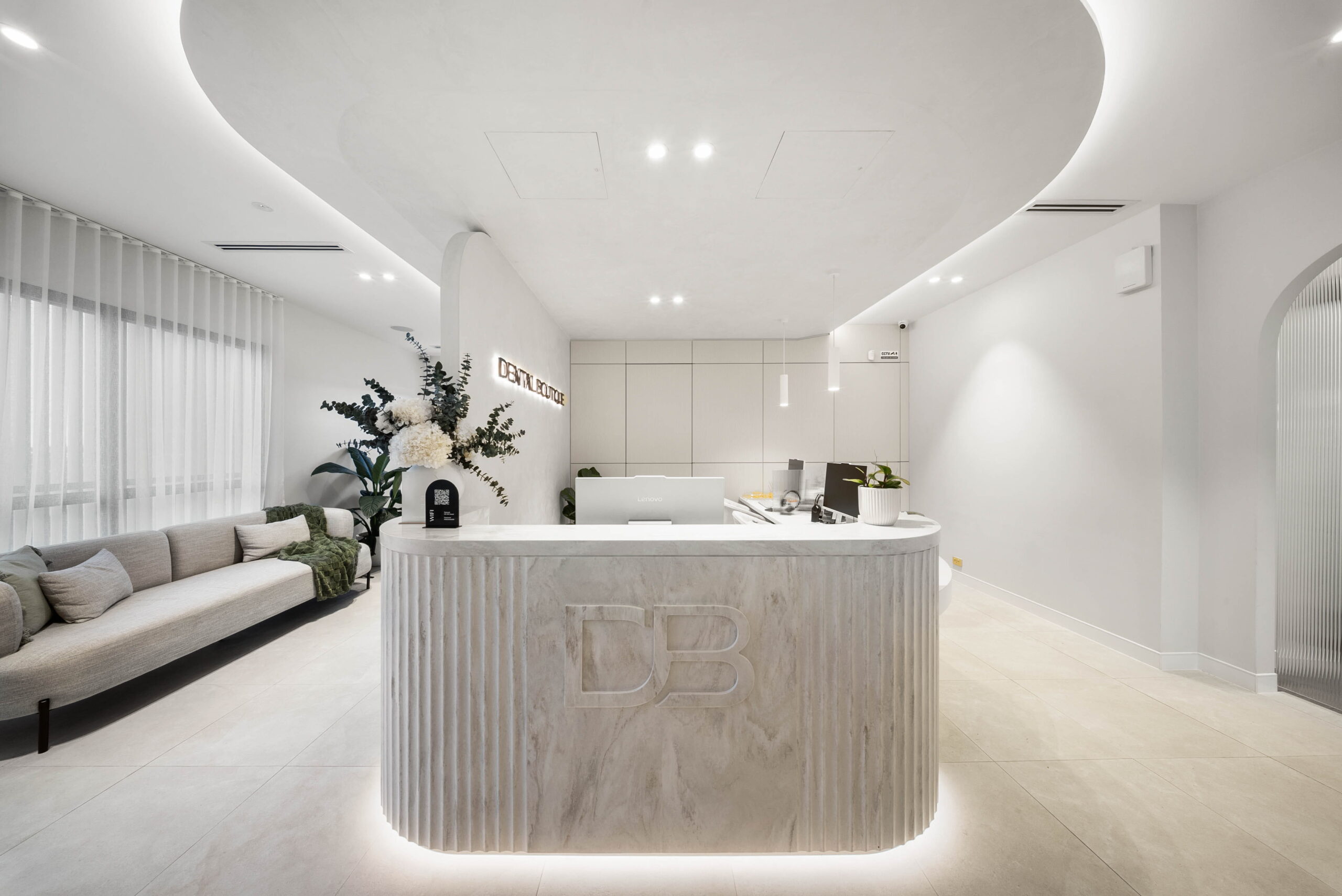
This is where setting up a medical practice gets genuinely complex. The fit-out is a compliance exercise, a patient experience challenge, and a clinical workflow problem running at the same time.
The decisions made here shape how your clinic performs for the next 10 to 15 years.
The choice of builder matters more here than at any other stage.
NCC Class 9a: The Classification Most People Miss
Under the National Construction Code, your clinic must be classified as a Class 9a building, a health care building. Most commercial tenancies are Class 6 (retail and commercial premises).
Where a site isn’t already Class 9a, reclassification is a formal process involving the certifier and potentially the council, adding time and cost before construction can begin.
This is often where timelines and budgets begin to drift.
At RiteSpace Constructions, we assess building classification during the initial site review, before any design work begins, so the issue is identified and resolved at the planning stage rather than mid-build.
What RACGP Standards Actually Require
The RACGP 5th Edition Standards for general practices aren’t legally mandatory in the way a building code is, but they are required for accreditation. Accreditation, in turn, is required to access government programs, including Medicare incentive payments and the Practice Incentives Programme.
The standards set performance requirements across infection control, privacy, accessibility, safety, and clinical workflow. They don’t prescribe a fixed layout, but they do determine:
- Minimum consulting room sizes: Performance requirements that influence both layout efficiency and compliance sign-off.
- Separation between clean and dirty utility areas: A zoning requirement that shapes how your clinical spaces relate to each other.
- Acoustic privacy between rooms: Relevant to both patient privacy and your RACGP accreditation assessment.
- Emergency access paths: A safety requirement that affects corridor widths, room placement, and circulation design.
Each of these has real design implications. The way RACGP standards for clinic design translate into room sizes, zoning decisions, and material choices is worth understanding before the brief is written.
Infection Control Zoning
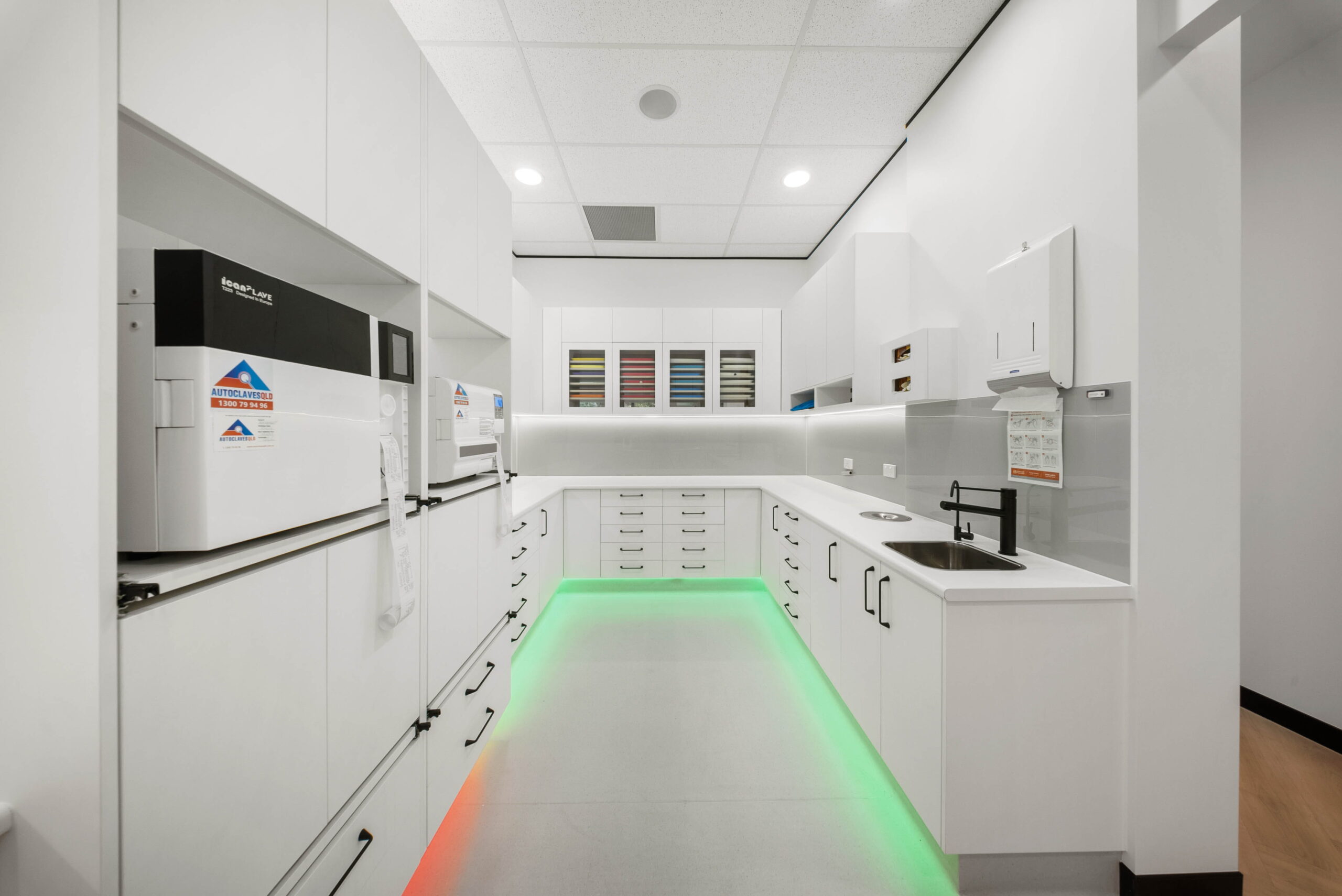
Infection control governs how your clinic is zoned internally. This includes where clean and dirty workflows separate, how sterilisation areas relate to treatment rooms, where clinical waste is stored, and what air handling systems procedural spaces require.
These are layout decisions, not finish-related decisions. They need to be resolved during design, not during construction.
DA Approvals and the Six-Week Window
Development and building approvals are often the longest lead-time item in a medical fit-out. They depend heavily on the quality of documentation submitted.
Incomplete DA documentation, drawings that don’t satisfy certifier requirements, or a building classification dispute can stall your project for weeks, sometimes months.
At RiteSpace Constructions, we manage design, documentation, and council approvals in-house. Six weeks from brief to approved documentation, ready for construction to begin. That’s the window we work to, and it comes from experience across more than 500 healthcare projects in QLD, NSW, VIC, SA, and the ACT. Working with separate designers, certifiers, and builders introduces handover delays and removes a clear line of responsibility when an approval issue arises.
Patient Flow and Layout Decisions
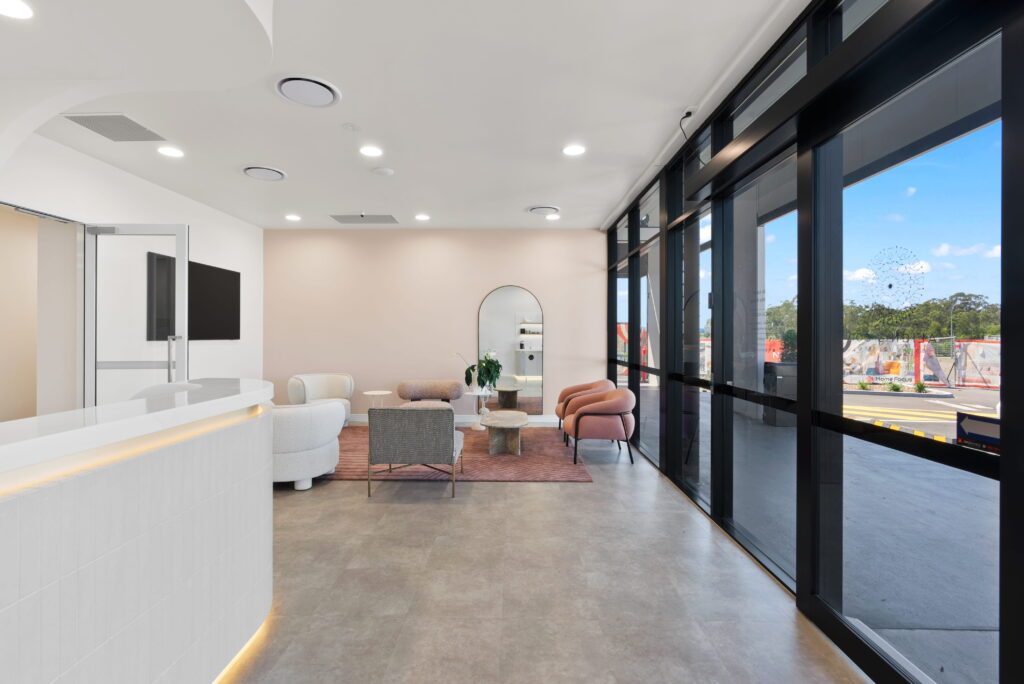
How your patients move through the clinic, from reception to waiting, consultation to exit, is a design decision with lasting operational consequences.
It affects how many patients you can see each day, how efficiently your staff move between areas, and how comfortable patients feel during sensitive appointments. A well-planned layout directly supports your ability to increase consultation capacity without adding floor space. Once walls are built, changing them is expensive and disruptive.
The principles behind designing a medical clinic (layout, clinical zoning, and technology integration) are closely connected, and the sequencing of those decisions matters.
As specialists in medical fit-out, we bring clinical consultancy into the design process to ensure the physical space supports the way your team actually works.
Specialist vs Shopfitter
A commercial shopfitter may complete a medical fit-out for less. The question is what they don’t know to ask, and what those gaps cost you.
Class 9a reclassification, infection control zoning, RACGP-compliant room adjacencies, healthcare HVAC specifications, clinical waste positioning, and acoustic privacy are all areas where a builder without healthcare experience will either miss the requirement or resolve it incorrectly.
The correction arrives at certification, stalling your opening, or after handover, when the remediation cost is considerably higher.
A lower build quote rarely accounts for a delayed opening, a failed certification, or a clinic that doesn’t function as intended.
Stage 5: Technology, Telehealth, and Clinical Systems
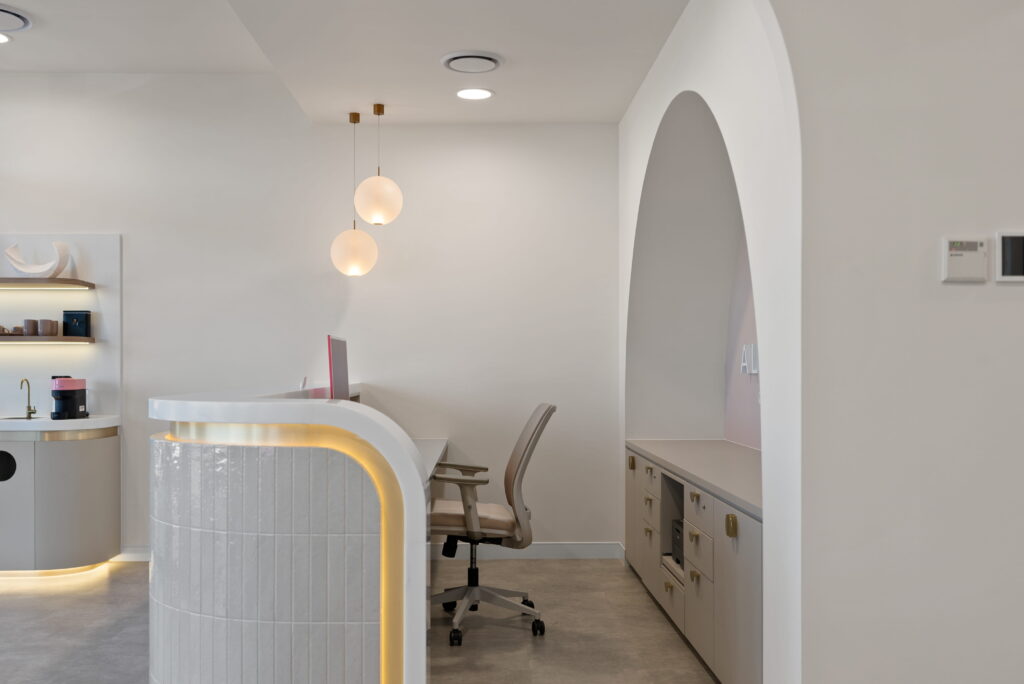
Technology decisions made after the fit-out is complete cost more than the same decisions made during it.
Cabling infrastructure, data points, power positioning, telehealth-ready rooms, and server space all need to be considered at the design stage, not after walls are plastered.
Build Telehealth in from the Start
Telehealth is now a permanent part of Australian GP practice. Consultation rooms used for virtual appointments need appropriate lighting, acoustic separation from adjacent rooms, and reliable data connectivity.
Addressed during fit-out design, the cost is marginal. Retrofitted after handover, the disruption and expense are a different matter entirely.
Practice Management Software and Clinical Systems
Your software selection affects hardware requirements, data security obligations, and accreditation readiness. It also determines the IT infrastructure scope, which flows directly into your fit-out brief. Locking in that choice before construction documentation is finalised avoids expensive late changes to service layouts.
One practical detail worth confirming early: reliable connectivity isn’t guaranteed across all commercial locations. If your preferred site is in an area with inconsistent coverage, verify access before signing a lease. Retrofitting infrastructure after handover is a costly and avoidable problem.
Stage 6: Staffing and Accreditation
Staffing and accreditation typically run in parallel during the final months before opening. Both have lead times that are easy to underestimate.
The Practice Manager
Your practice manager should be in the role four to six weeks before opening day. They need time to set up administrative systems, train reception staff on billing procedures, and configure the practice management software before the first patient is booked.
Involving them during the fit-out design review also pays dividends. Practice managers understand daily operational requirements in a way most designers and builders don’t. Their input during layout sign-off regularly surfaces problems far cheaper to resolve on paper than in a completed space.
RACGP Accreditation
Accreditation against RACGP standards is conducted by approved agencies, including AGPAL and QPA. The process involves a self-assessment, a documentation review, and a site visit.
Allow at least three to six months from opening before your accreditation survey. Use the pre-opening period to document policies, procedures, and quality improvement systems.
A clinic built by a team that already understands RACGP requirements is measurably easier to take through accreditation. The physical space already meets what assessors look for, and the documentation work is what remains.

How RiteSpace Constructions Supports Medical Clinic Builds
Planning and delivering a medical fit-out requires more than construction capability. It requires an understanding of how healthcare environments function, from compliance and approvals through to the clinical workflows that shape how your space is used every day.
At RiteSpace Constructions, we take a structured approach that aligns design, construction, services, and delivery from the beginning. This reduces fragmentation and gives you clearer visibility over how your project develops.
Our work spans general practice, specialist clinics, and allied health environments, with a focus on practical space planning, compliance, and long-term functionality. With over 500 completed healthcare projects nationally, we understand how these elements come together and where they tend to go wrong without the right team in place.
Ready to Plan Your Medical Clinic Build?
Planning done well makes every stage easier. Getting the right team behind you from the start is where that planning begins.
Take a look at our recent projects to understand what’s possible, then book a consultation with our team or download our free eBook to start shaping your clinic with clarity and confidence.
Frequently Asked Questions
Q. How much does it cost to set up a medical practice in Australia?
Ans. The honest answer is that costs vary considerably depending on practice size, tenancy type, state, and the level of specification required. A small GP fit-out in a warm shell sits in a very different range to a larger specialist clinic starting from a cold shell, and the gap between the two can be significant.
Industry estimates exist, but they’re broad enough to be of limited use without site-specific context. Equipment, IT, approvals, and contingency all add to the construction cost in ways that catch first-timers off guard. A detailed assessment from a healthcare builder will give you a far more accurate picture than any published figure.
Q. What building class does a medical clinic need to meet?
Ans. Your clinic must be classified as a Class 9a building under the National Construction Code. Most commercial tenancies are Class 6. Where a site isn’t already Class 9a, reclassification is a formal process involving the certifier and potentially the council, adding cost and time.
This is one of the most common and costly surprises for practice owners who engage a builder without healthcare construction experience.
Q. Do I need RACGP accreditation before I can open?
Ans. Accreditation isn’t required to open, but it is required to access several government funding programs, including Medicare incentive payments and the Practice Incentives Programme. The process typically takes three to six months from application.
Planning for accreditation from the start of your fit-out means the physical space will already meet requirements when assessors visit.
Q. What’s the difference between a warm shell and a cold shell?
Ans. A warm shell is a tenancy where base building services, including power, plumbing, and air conditioning, have been brought to the space and are ready for an interior fit-out to begin. A cold shell is a bare structural space with nothing delivered.
The fit-out cost difference between the two can be substantial, and a site that looks well-priced per square metre may not reflect what your fit-out will actually cost. Always have a healthcare construction specialist assess the tenancy before signing.
Q. How long does it take to set up a medical practice from scratch?
Ans. For a practice starting from the business planning stage, 12 to 18 months is a realistic timeline, longer where there are DA complications, landlord negotiations, or accreditation applications involved.
The construction and fit-out phase typically takes 10 to 16 weeks once approvals are in place. The design and approval phase with RiteSpace Constructions runs to approximately six weeks, so the quality of that process directly affects how efficiently your project moves.